OBC Government Schemes in India: MSME Benefits, Subsidies & Business Support – BICCI’s Initiative
Government of India MSME Schemes for OBC Entrepreneurs
The Government of India, through the Ministry of Micro, Small and Medium Enterprises (MSME), implements several schemes to promote entrepreneurship, employment generation, industrial development and the growth of Micro, Small and Medium Enterprises across the country.
These schemes provide financial assistance, credit support, subsidies, skill development, technology upgradation, market access and business development opportunities.
Entrepreneurs belonging to the Other Backward Classes (OBCs) can benefit from several of these initiatives. Importantly, OBC entrepreneurs receive special-category benefits under the Prime Minister’s Employment Generation Programme (PMEGP), while several other MSME schemes are open to all eligible enterprises, irrespective of social category.
This article explains the important MSME schemes, special provisions available to OBC entrepreneurs, eligibility requirements and application procedures.
1. Special MSME Scheme for OBC Entrepreneurs – PMEGP
Prime Minister’s Employment Generation Programme (PMEGP)
The Prime Minister’s Employment Generation Programme is one of the most important government schemes for OBC individuals planning to establish new micro-enterprises.
Implemented by the Ministry of MSME through the Khadi and Village Industries Commission (KVIC), the programme provides bank-linked financial assistance with a government margin money subsidy.
OBC entrepreneurs are specifically included in the Special Category under PMEGP.
Financial Benefits for OBC Entrepreneurs
|
Particulars |
Benefits |
|
Maximum Manufacturing Project Cost |
INR 50 Lakh |
|
Maximum Service/Business Project Cost |
INR 20 Lakh |
|
Beneficiary Contribution |
5% |
|
Urban Area Subsidy |
25% |
|
Rural Area Subsidy |
35% |
Example of PMEGP Subsidy
Suppose an eligible OBC entrepreneur establishes a new manufacturing unit with a project cost of INR 20 lakh in a rural area.
- Total Project Cost: INR 20 lakh
- Entrepreneur’s Contribution: INR 1 lakh (5%)
- Government Margin Money Subsidy: INR 7 lakh (35%)
- Remaining Finance: Through the bank, subject to sanction and applicable adjustments.
For an urban project of the same cost, the applicable subsidy would be INR 5 lakh (25%).
The subsidy is adjusted according to PMEGP rules and is not an upfront cash grant paid directly to the entrepreneur.
Key Eligibility Conditions
- Applicant must be at least 18 years old.
- The project must be a new eligible micro-enterprise.
- OBC applicants must submit valid category documentation.
- For projects above INR 10 lakh in manufacturing or INR 5 lakh in business/service, the applicant must have at least an VIII-standard educational qualification.
- Existing units and certain previously subsidised units are subject to separate eligibility restrictions.
How to Apply:
https://www.kviconline.gov.in/pmegpeportal/
Official information: https://msme.gov.in/
2. Other MSME Government Schemes Available to OBC Entrepreneurs
Apart from PMEGP, OBC entrepreneurs can also benefit from several other Ministry of MSME programmes. These schemes are generally available to eligible enterprises irrespective of caste or social category, unless a specific additional provision applies.
A. Credit Guarantee Scheme – CGTMSE
The Credit Guarantee Scheme for Micro and Small Enterprises helps eligible businesses access institutional credit without conventional collateral security, subject to the scheme’s conditions.
Key Benefits:
- Credit guarantee support for eligible loans through banks and financial institutions.
- Assistance in improving access to business and working capital finance.
- Reduced dependence on collateral security.
- Applicable to eligible new and existing Micro and Small Enterprises.
The guarantee coverage limit has been enhanced up to INR 10 crore under the revised scheme framework, subject to applicable conditions.
Important: CGTMSE does not directly provide loans or subsidies to entrepreneurs. It provides guarantee support to participating lending institutions.
Official Website: https://www.cgtmse.in/
B. PM Vishwakarma Scheme
PM Vishwakarma is a government initiative for traditional artisans and craftspeople.
Eligible OBC artisans can benefit from this scheme if they work in one of the 18 notified traditional trades.
Key Benefits:
- Recognition through a PM Vishwakarma certificate and ID card.
- Skill training and a stipend of INR 500 per day during eligible training.
- Toolkit incentive of up to INR 15,000.
- Collateral-free enterprise development loans of up to INR 3 lakh in two stages.
- Concessional interest rate of 5% for beneficiaries.
- Marketing and digital transaction support under applicable guidelines.
The scheme is occupation-based and is not exclusively for OBC entrepreneurs.
Official Website: https://pmvishwakarma.gov.in/
C. Procurement and Marketing Support (PMS) Scheme
This scheme helps Micro and Small Enterprises improve their market access, product visibility and business opportunities.
Key Benefits:
- Participation in domestic and international trade fairs.
- Exhibition and buyer-seller meet opportunities.
- Marketing and promotional support.
- Vendor Development Programmes.
- Assistance in connecting with potential buyers and institutions.
OBC-owned eligible MSMEs can participate under the applicable scheme guidelines.
Official Information: https://msme.gov.in/
D. MSME Sustainable (ZED) Certification Scheme
The Zero Defect Zero Effect (ZED) scheme encourages MSMEs to improve product quality, manufacturing processes, productivity and environmental sustainability.
Key Benefits:
- Financial assistance towards ZED certification.
- Support for quality improvement and process modernisation.
- Handholding and consultancy support.
- Assistance for testing and product certification under applicable guidelines.
Certification subsidy structure:
|
MSME Category |
Base Subsidy |
|
Micro Enterprises |
80% |
|
Small Enterprises |
60% |
|
Medium Enterprises |
50% |
|
Women-owned MSMEs |
100% |
An additional 10% subsidy is available for eligible SC/ST-owned MSMEs and specified geographical categories. This additional SC/ST benefit does not automatically apply to OBC-owned enterprises.
Women-owned MSMEs, including eligible OBC women-owned enterprises, can benefit from the 100% certification subsidy under the applicable conditions.
Official Website: https://zed.msme.gov.in/
E. MSME Entrepreneurship and Skill Development Programme (ESDP)
The Entrepreneurship and Skill Development Programme aims to develop entrepreneurial capabilities among aspiring and existing business owners.
OBC youth and entrepreneurs can participate in eligible training programmes.
Key Benefits:
- Entrepreneurship Awareness Programmes.
- Entrepreneurship-cum-Skill Development Programmes.
- Management Development Programmes.
- Business planning and project preparation.
- Technical and managerial skill development.
- Training to establish and expand MSMEs.
The programme is particularly useful for first-generation entrepreneurs who need business knowledge and practical guidance before establishing an enterprise.
Official Website: https://msme.gov.in/
F. Micro and Small Enterprises Cluster Development Programme (MSE-CDP)
This scheme promotes the development of industrial clusters and common infrastructure for Micro and Small Enterprises.
OBC-owned MSMEs can participate through eligible clusters and associations.
Key Benefits:
- Common Facility Centres.
- Testing and quality-control facilities.
- Common production and processing infrastructure.
- Technology upgradation.
- Training and skill development.
- Common raw material and logistics facilities.
- Better market access and competitiveness.
This scheme is particularly useful for groups of entrepreneurs manufacturing similar or complementary products.
Official Information: https://my.msme.gov.in/MyMsme/Reg/COM_ClusterForm.aspx
G. Scheme of Fund for Regeneration of Traditional Industries (SFURTI)
SFURTI supports traditional industries and artisan clusters by improving their productivity, infrastructure and market competitiveness.
Eligible OBC artisans and enterprises can participate through approved clusters and implementing agencies.
Key Benefits:
- Common production facilities.
- Modern machinery and equipment.
- Skill development and capacity building.
- Product design and packaging support.
- Branding and market linkages.
- Cluster-based infrastructure development.
The scheme has supported traditional sectors such as handicrafts, textiles, bamboo, honey, agro-processing, khadi and coir.
Funding and fresh project availability must be checked against current scheme guidelines.
Official Website: https://msme.gov.in/
H. MSME Trade Enablement and Marketing (TEAM) Initiative
The TEAM initiative operates under the RAMP programme and aims to improve market access for Micro and Small Enterprises through digital commerce.
Eligible OBC-owned Micro and Small Enterprises can benefit on the same basis as other qualifying MSEs.
Key Benefits:
- Support for onboarding on the ONDC network.
- Assistance in creating digital product catalogues.
- Digital marketing and market access.
- Account management support.
- Eligible packaging and logistics assistance.
The initiative has an approved outlay of INR 277.35 crore for 2024–27.
Official Information: https://ramp.msme.gov.in/
I. MSE Green Investment and Financing for Transformation (MSE-GIFT)
This RAMP sub-scheme encourages eligible Micro and Small Enterprises to adopt green technologies and environmentally sustainable business practices.
Key Features:
- Interest subvention of 2% per annum under the specified financing facility.
- Eligible term loans up to INR 2 crore.
- Support for energy efficiency and resource conservation.
- Assistance for waste management, clean technology and environmental improvements.
The scheme has specific loan-sanction windows and conditions. Entrepreneurs should verify whether fresh financing is currently being accepted before applying.
Official Information: https://ramp.msme.gov.in/
J. MSE Scheme for Promotion and Investment in Circular Economy (MSE-SPICE)
This initiative promotes resource efficiency, recycling, reuse and circular economy practices among Micro and Small Enterprises.
Key Benefits:
- Credit-linked capital subsidy of 25% on eligible plant and machinery.
- Maximum subsidy of INR 12.5 lakh.
- Applicable to eligible brownfield projects costing up to INR 2 crore.
- Support for sustainable production and waste reduction.
OBC-owned eligible MSEs can apply under the same prescribed conditions as other qualifying enterprises.
Official Information: https://ramp.msme.gov.in/
3. Government Procurement Opportunities for OBC-Owned MSMEs
Government procurement is an important business opportunity for OBC entrepreneurs.
Under the Public Procurement Policy for Micro and Small Enterprises, Central Ministries, Departments and Central Public Sector Enterprises have an annual procurement target of at least 25% from eligible MSEs.
The policy also provides certain facilities, including:
- Free tender documents for eligible MSEs.
- Exemption from Earnest Money Deposit (EMD), subject to applicable rules.
- Opportunities under the L1+15% price-band provision.
- Participation in Vendor Development Programmes and Buyer-Seller Meets.
- Opportunities to supply goods and services to government institutions and CPSEs.
Is There a Separate OBC Procurement Reservation?
At present, the Public Procurement Policy provides a 4% sub-target for SC/ST-owned MSEs and a 3% sub-target for women-owned MSEs within the overall MSE procurement target.
There is no separate OBC procurement sub-target under this policy.
However, eligible OBC-owned MSEs can participate in the general MSE procurement framework and access the benefits available to qualifying MSEs.
Government e-Marketplace: https://gem.gov.in/
4. BICCI’s Engagement with the Ministry of MSME
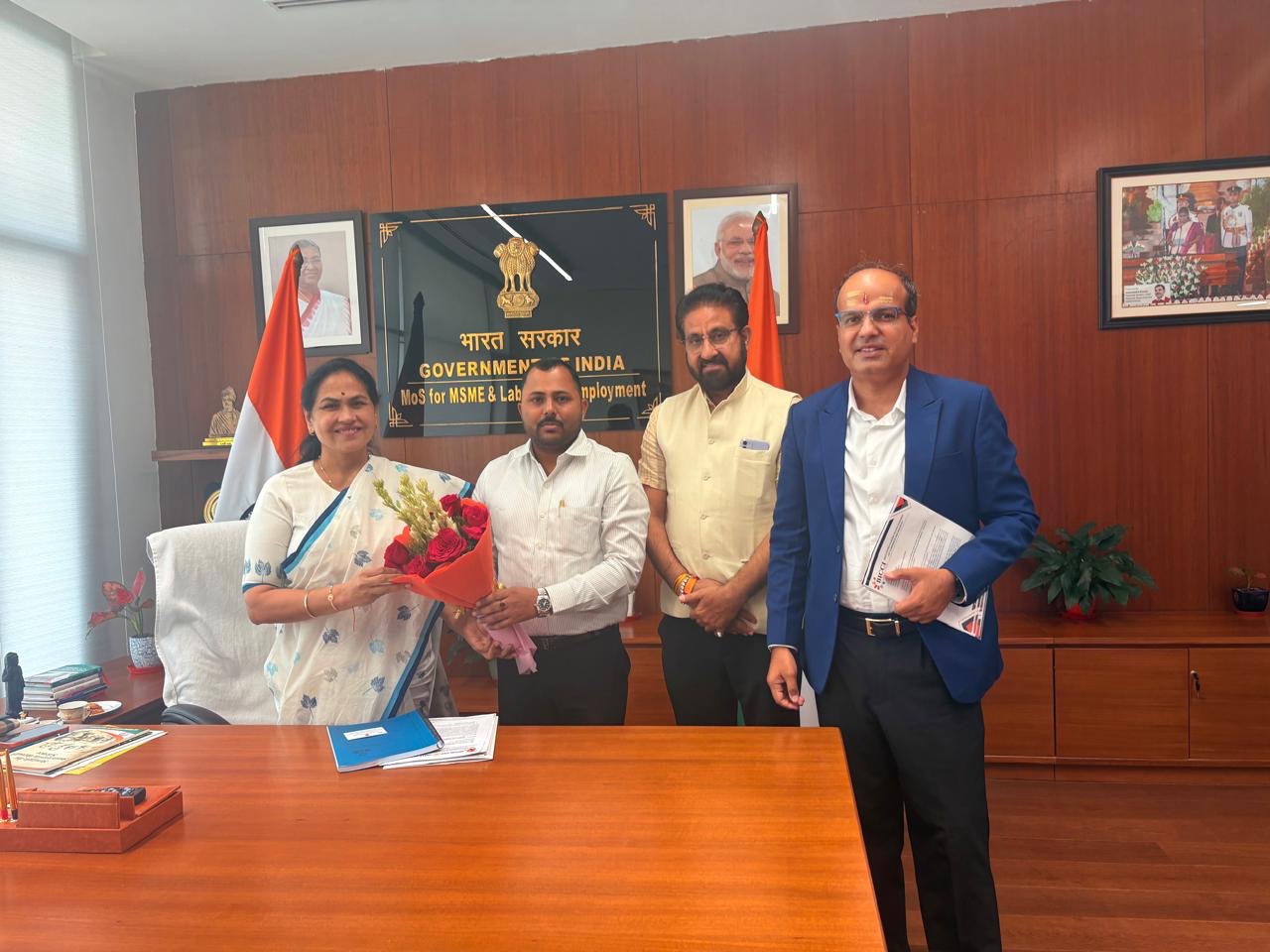
In an important development towards strengthening the participation of OBC entrepreneurs in India’s MSME ecosystem, representatives of the Backward Classes Indian Chamber of Commerce & Industry (BICCI) met with the Union Minister for MSME and engaged with the Ministry on issues concerning entrepreneurship, industrial development and financial inclusion.
The meeting provided an opportunity to discuss the challenges faced by OBC entrepreneurs, particularly in accessing institutional finance, government procurement, business development support and entrepreneurship-related programmes.
BICCI highlighted the need for stronger institutional mechanisms to ensure that OBC entrepreneurs can effectively access existing government schemes and participate more actively in India’s industrial growth.
Four Key Policy Recommendations Submitted by BICCI
During the interaction, BICCI submitted important policy recommendations aimed at strengthening the OBC entrepreneurship ecosystem.
1. Establishment of a National OBC MSME Entrepreneurship Hub
BICCI proposed the establishment of a dedicated National OBC MSME Entrepreneurship Hub, on the lines of the National SC-ST Hub, to provide institutional support, mentoring, financial guidance, market linkages and business-development assistance to OBC entrepreneurs.
2. Special OBC MSME Procurement Target
BICCI proposed a dedicated procurement target or appropriate policy mechanism to improve the participation of OBC-owned eligible MSMEs in government departments, ministries, public sector enterprises and institutional procurement.
3. OBC Enterprise Development Programme
BICCI proposed a focused entrepreneurship development programme for OBC entrepreneurs covering skill development, technology upgradation, financial literacy, business management, startup support and industrial capacity building.
4. Dedicated OBC MSME Facilitation Desk
BICCI proposed the creation of a dedicated facilitation mechanism within the MSME ecosystem to guide OBC entrepreneurs regarding government schemes, subsidies, credit facilities, registrations, tender participation and institutional support.
These recommendations are intended to address existing gaps in access to finance, market opportunities and institutional assistance.
The proposals represent BICCI’s policy recommendations to the Government. Their acceptance, implementation or notification would be subject to the Government’s consideration and approval.
5. How BICCI Can Help OBC Entrepreneurs
The Backward Classes Indian Chamber of Commerce & Industry (BICCI) is working to strengthen the participation of OBC entrepreneurs in the country’s industrial, manufacturing and business ecosystem.
Through its institutional engagement and nationwide entrepreneur network, BICCI aims to connect eligible entrepreneurs with relevant government schemes and development opportunities.
BICCI’s proposed facilitation activities include:
- Creating awareness about government MSME schemes and subsidies.
- Guiding entrepreneurs on scheme eligibility and documentation.
- Organising entrepreneurship and skill-development programmes.
- Facilitating participation in Vendor Development Programmes.
- Promoting awareness of GeM and government procurement opportunities.
- Encouraging OBC women entrepreneurs and first-generation business owners.
- Connecting MSMEs with relevant financial institutions and government departments.
- Facilitating institutional dialogue on policy issues affecting OBC entrepreneurs.
Entrepreneurs interested in government MSME schemes can connect with BICCI to learn about available opportunities and guidance.
Important: BICCI membership is not a mandatory condition for applying to government schemes. Final eligibility, financial assistance and scheme benefits are determined by the respective implementing agencies.
6. Empowering OBC Entrepreneurs Through Inclusive MSME Development
Micro, Small and Medium Enterprises play a vital role in India’s economic growth, industrial production, employment generation and exports.
For OBC entrepreneurs, access to financial assistance, market opportunities, technology, skill development and institutional support can create significant opportunities for business expansion and sustainable growth.
While PMEGP provides a specific Special Category subsidy benefit to eligible OBC applicants, other MSME schemes offer additional opportunities to eligible enterprises regardless of social category.
The efforts of BICCI to engage with the Ministry of MSME and submit dedicated policy recommendations reflect its commitment to ensuring greater institutional recognition, participation and opportunities for OBC entrepreneurs.
BICCI will continue to advocate for inclusive MSME policies, stronger entrepreneurship support systems and equitable access to India’s industrial and economic opportunities.
Official Government Resources
- Ministry of MSME: https://msme.gov.in/
- MSME Scheme Directory: https://my.msme.gov.in/mymsme/Scheme.aspx
- PMEGP Application: https://www.kviconline.gov.in/pmegpeportal/
- CGTMSE: https://www.cgtmse.in/
- PM Vishwakarma: https://pmvishwakarma.gov.in/
- MSME ZED Certification: https://zed.msme.gov.in/
- MSME RAMP: https://ramp.msme.gov.in/
- Government e-Marketplace: https://gem.gov.in/
About BICCI
Backward Classes Indian Chamber of Commerce & Industry (BICCI) works towards promoting entrepreneurship, industrial development, MSME growth and economic empowerment of Backward Classes across India.
Website: https://www.bicci.in/
For a Better Change
Disclaimer: This article is intended for general information and awareness. Scheme benefits, eligibility, financial assistance and application windows are governed by the latest official guidelines of the respective Government departments and implementing agencies. BICCI does not guarantee approval or financial assistance under any government scheme.